Early Years Foundation Stage (Nursery and Foundation): part five – Do I need a Tutor to Get Ready for School?

This is the final post in our five-part series on Nursery and Reception (the Early Years Foundation Stage). You can read the rest of the posts here. Better Tuition’s team of qualified teachers is expert in education from Early Years right up to GCSE and beyond, but when parents ask us to tutor their pre-school child to help them get ready for school, we always say no and explain why our Urmston tuition centre does not offer tuition for children under the age of five.
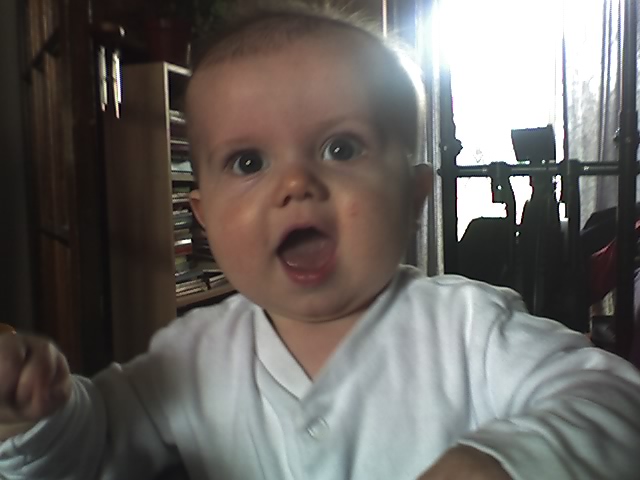
Tuition's not for everyone!

Tuition’s not for everyone!

We advocate taking a step back and allowing your child to be the leader in their own pre-school education. Children have a natural love of learning and love to explore the world and its many mysteries.

1. Tuition could make a pre-school child anxious

Parents want the best for their child. Most of us worry whether we are giving our child enough time and input to ensure they achieve their academic goals. If you engage a tutor to help your pre-school child ‘get ready for school’, however, you are sending them a signal that you want them to excel academically and demonstrating to them that extra help is needed to achieve this. Tuition for pre-school children may be counter-productive and cause your young child to become anxious. Teachers, academics, and educational psychologists agree that very young children should not be pressurised in this way and may feel anxious if told they have to get ready for school with a tutor.

2. The effects of tuition cannot be accurately measured in pre-school children

There is no research evidence to suggest that tuition is in any way beneficial to a pre-school child. There is no need to use a tutor to get ready for school.  Your child will be closely monitored by the professionals at nursery/ school and intervention is swift at this stage, if a learning difficulty is identified. That is why the teaching team at the Better Tuition Centre, Urmston will not accept children before they are five: in our professional judgement, tuition is superfluous before this age.  You do not need a tutor to help your pre-school child get ready for school.

3. Pre-school tuition can make parents anxious

Perhaps you feel anxious about your child’s educational future; everyone is keen to ensure their child performs to the very best of their ability.  You worry that you need to do something to help your pre-school child get ready for school. If you engage a tutor at a time when your child has not even begun their formal schooling and is not ready for it, you will only make yourself – and them – more anxious.  The advice of the expert team at the Better Tuition Centre, Urmston is to wait to let your child settle at school before engaging a tutor (and only ever do so if necessary).  Money spent on tuition to help your pre-school child get ready for school is money wasted.

So, having ruled out tuition, what can you do to help your child get ready for school?

You can help your child get ready for school with practical skills such as toilet training, putting on their coat and shoes and learning to grip a crayon or pencil. If appropriate, you can start to show them how to use scissors or recognise letters. Read our previous post on this here. You can find some pre-school/ Early Years literacy games here on our website. If you are concerned that your pre-school child may have learning difficulties, the proper person to speak to is their Health Visitor, who in most cases will be able to offer reassurance and in some cases intervention. If your child is over five and you feel they would benefit from some tuition, feel free to call Paul Syrett or Christine McLaughlin to book your free, no obligation assessment. Until then, remember that children are candles to be lit, not vessels to be filled, and that their own personal learning style cannot develop if their early learning is over-managed by unnecessary tuition.

Print Friendly, PDF & Email
Posted in Early Years, Opinion, Pre-school, Top tips | Tagged , , , , , , , , , , , , , , , , , , , , , , | 1 Comment

What to expect in the Early Years Foundation Stage and Reception: part four

This post is part of a series on what to expect in Nursery and Reception (the Early Years Foundation Stage).  So far we have given a brief overview of Nursery and Reception; the Early Learning Goals (Prime Areas and Specific Areas).

Find out how your Reception child will be assessed at www.bettertuition.co.uk.

Find out how your Reception child will be assessed at www.bettertuition.co.uk.

How will my child be assessed?

Assessment in the Early Years is low key and done mainly by observation.  Your child’s teacher (and teaching assistants) will watch your child play, interact with others and carry out particular tasks.  Later in the Early Years Foundation Stage, your child’s reading and numeracy will be observed and logged.  Throughout Nursery and Reception examples of your child’s progress will be collected.  These may include drawings and other art work, photographs of your child performing a task (e.g. bouncing a ball) and written work.

The Early Years Foundation Stage Profile

In the final term of Reception, your child’s teacher will complete an Early Years Foundation Stage Profile for your child. The Profile provides a well-rounded picture of your child’s progress and measures how ready s/he is for Year 1.   Your child’s level of development will be assessed against the Early Learning Goals (the three prime areas and four specific areas).

Your child’s teacher will indicate whether s/he is meeting expected levels of development, or if they are exceeding expected levels, or not yet reaching expected levels (‘emerging’).  The profile describes each child’s attainment against the 17 Early Learning Goals together with a short narrative about their learning characteristics.

If you are worried about your child’s progress

If your child is not yet meeting the expected levels in more than a couple of areas, you might worry that they are struggling, but it’s very important to remember that all children develop at different speeds.  This is particularly the case in the early years of learning.  Some children who are very far ahead by the end of Reception, may settle to a more average level by the end of Year 1.  This is not cause for concern as young children sometimes progress in fits and starts.  Make sure your child  has all the support s/he needs at home and school, and do ask the school for extra help if you feel it is needed.  If you are still concerned, please don’t hesitate to book a free, no obligation assessment with Paul or Christine at Better Tuition.  We are educational experts and can hopefully reassure you.

Resources and information to help

Better Tuition has some downloadable resources and tips to help your child develop secure numeracy and literacy skills.  You can find them on this link.

This document is an edited version of the Department for Education’s Statutory Framework for the Early Years Foundation Stage.  All information is correct at the time of publication.  The full framework may be accessed at http://tinyurl.com/87xmlhv.

Image courtesy of David Castillo Dominici / FreeDigitalPhotos.net
Print Friendly, PDF & Email
Posted in Early Years, FREE downloads | Leave a comment

What to expect in the Early Years Foundation Stage (Nursery and Reception): part three

This is part of a series of posts about the Early Years Foundation Stage (read part one here and part two – the Prime Areas – here).

The Early Learning Goals are divided into Prime and Specific Areas.  Yesterday we explained the Prime Areas – today’s post will explain the Specific Areas.  These are the subject areas your child can expect to cover by the end of their Reception year.

Find out about the Early Years Foundation Stage at www.bettertuition.co.uk.

Find out about the Early Years Foundation Stage at www.bettertuition.co.uk.

The Specific Areas:

Literacy

Reading:

Children learn to read and understand simple sentences. They use phonics to sound out words. They also read some common irregular words. They understand the texts they read.

Writing:
Children learn to use phonics to write words in ways which match their spoken sounds. They also write some irregular common words. They write simple sentences, which can be read by themselves and others.  Some words are spelt correctly and others can be understood although they are not correctly spelled.

Mathematics

Numbers:

Children learn to count reliably with numbers from 1 to 20, place them in order and say which number is one more or one less than a given number. Using quantities and objects, they add and subtract two single-digit numbers and count on or back to find the answer. They solve problems, including doubling, halving and sharing.

Shape, space and measures:
Children learn to talk about size, weight, capacity, position, distance, time and money, to compare quantities and objects and to solve problems. They recognise, create and describe patterns. They explore characteristics of everyday objects and shapes and use mathematical language to describe them.

Understanding the world

People and communities:

Children talk about past and present events in their own lives and in the lives of family members. They learn that other children don’t always enjoy the same things, and are sensitive to this. They learn about similarities and differences between themselves and others, and among families, communities and traditions.

The world:

Children learn about similarities and differences in relation to places, objects, materials and living things. They talk about their own immediate environment. They make observations of animals and plants.

Technology:
Children learn that technology is used in places such as homes and schools. They select and use technology for particular purpose

Expressive arts and design

Exploring and using media and materials:

Children learn to sing songs, make music and dance, and experiment with ways of changing them. They safely use and explore a variety of materials, tools and techniques, experimenting with colour, design, texture, form and function.

Being imaginative:

Children learn use their imagination. They represent their own ideas, thoughts and feelings through design and technology, art, music, dance, role-play and stories.

These are the Specific Areas: you can also read about the Prime Areas.  Together they make up the Early Learning Goals.  Next we will examine how your child will be assessed in Nursery and Foundation.

This document is an edited version of the Department for Education’s Statutory Framework for the Early Years Foundation Stage.  All information is correct at the time of publication.  The full framework may be accessed at http://tinyurl.com/87xmlhv.

Image courtesy of David Castillo Dominici / FreeDigitalPhotos.net
Print Friendly, PDF & Email
Posted in Uncategorized | 2 Comments

What to expect in the Early Years Foundation Stage and Reception: (part two)

This post is part of a series on what to expect in Nursery and Reception (the Early Years Foundation Stage).  Yesterday we gave a brief overview of nursery; today we will look at the Early Learning Goals.

Find out about Early Learning Goals at www.bettertuition.co.uk.

Find out about Early Learning Goals at www.bettertuition.co.uk.

The Early Learning Goals are the main areas your child’s teacher will focus on during Reception and Nursery.  They are divided into prime and specific areas.  Today we will look at the Prime Areas and tomorrow we will look at the Specific Areas.

The Prime Areas

1.  Communication and language

Listening and attention:
Children learn to listen attentively in a range of situations. They listen to stories, give their attention to what others say and respond appropriately, while engaged in another activity.

Understanding:
Children learn to follow instructions involving several ideas or actions. They answer ‘how’ and ‘why’ questions about their experiences and in response to stories or events.

Speaking:
Children learn to express themselves effectively, showing awareness of listeners’ needs. They use past, present and future forms accurately when talking about events that have happened or are to happen in the future. They develop their own narratives and explanations by connecting ideas or events.

2.  Physical development:

Moving and handling:
Children develop good control and co-ordination in large and small movements. They learn to move confidently in a range of ways, safely negotiating space. They learn to handle equipment and tools effectively, including pencils for writing.

Health and self-care:
Children learn the importance for good health of physical exercise, and a healthy diet, and talk about ways to keep healthy and safe. They manage their own basic hygiene and personal needs successfully, including dressing and going to the toilet independently.

3.  Personal, social and emotional development:

Self-confidence and self-awareness:
Children develop confidence to try new activities, and say why they like some activities more than others. They are confident to speak in a familiar group.  They say when they do or don’t need help.

Managing feelings and behaviour:
Children learn to talk about how they and others show feelings, talk about their own and others’ behaviour, and its consequences, and know that some behaviour is unacceptable. They work as part of a group or class, and understand and follow the rules.

Making relationships:
Children learn to take turns with others. They take account of one another’s ideas about how to organise their activity. They form positive relationships with adults and other children.

These are the Prime Areas: together with the Specific Areas (literacy, mathematics, understanding the world and expressive arts and design), they make up the Early Learning Goals.

This document is an edited version of the Department for Education’s Statutory Framework for the Early Years Foundation Stage.  All information is correct at the time of publication.  The full framework may be accessed at http://tinyurl.com/87xmlhv.

Image courtesy of pat138241 / FreeDigitalPhotos.net

Print Friendly, PDF & Email
Posted in Uncategorized | 1 Comment

What to expect in the Early Years Foundation Stage (Nursery and Reception): part one

What to Expect in the Early Years Foundation Stage (Nursery and Reception): Part One

Early Years Foundation Stage Curriculum

When your child starts nursery or reception, this can be an anxious time: it may be the first time you have left your child in the care of a near-stranger.  You will generally be expected to stay with them in nursery until they are settled (one or two days); in reception it is expected that you will leave them after ten minutes or so.

Your child will generally start with a shortened day (a couple of hours or so for a few days) in order to help them get used to this new setting.   Each child is assigned a key person.  They will ensure that your child’s learning and care is tailored to meet their individual needs.

Activities:

Children learn through a variety of activities in the Early Years Foundation Stage (EYFS):

– Playing and exploring – children investigate and experience things, and ‘have a go’;
– Active learning – children concentrate and keep on trying if they encounter difficulties, and enjoy achievements.
– Creating and thinking critically – children have and develop their own ideas, make links between ideas, and develop strategies for doing things.

The above is part one of a series of posts: next, we explain the Early Learning Goals (Prime Areas) of the Early Years Foundation Stage (Communication and Language, Physical Development, Health and Self-care and Personal, Social and Emotional Development). 

Image courtesy of David Castillo Dominici / FreeDigitalPhotos.net

Print Friendly, PDF & Email
Posted in Early Years, Top tips, Uncategorized | Tagged , , , | 3 Comments

Changes to Year 6 SATs: a brief explanation

The May 2013 SATs exams have changed: read on for a summary and dates of this year’s Year 6 SATs exams.

sats

Changes to English SATs May 2013

1.  There is no writing paper: writing will be assessed by your child’s class teacher and will take into account their written work throughout Year 6.  The class teacher will also assess speaking and listening

2.  As well as the English Reading paper (13th May), there is a new Spelling, Grammar and Punctuation paper (14th May).  This paper requires short answers (in many cases the multiple choice format is used) and covers areas such as parts of speech (nouns, prepositions etc), punctuation (full stops, brackets and so on) as well as spelling.  You can download a sample paper here.  In addition to this, there will be a 20-question spelling test, and you may download a sample paper here.

3.  In the main, levels 3-5 will be assessed, however if your child is working above a level 5 in maths or English (quite possible if they have passed grammar school entrance exams), they will probably take the level 6 papers.  You can download samples of the level 6 English papers here.

Maths SATs 2013

There will be a mental maths paper (15th May), a calculator paper and a non-calculator paper (both 16th May).  The government are proposing to remove the calculator paper from Year 6 SATs in future years.  Our Director of Teaching and Learning, Christine McLaughlin, was invited onto the BBC breakfast sofa to discuss this on national TV.  You can read more about our views on using calculators in maths here.

SATs preparation is important in order to give your child confidence to tackle these important tests.  Your child’s results will be passed on to their new secondary school and very often used to set them according to ability.  If you need extra help, please do not hesitate to contact Paul Syrett or Christine McLaughlin on 0161 748 3912 to book a FREE assessment.

Print Friendly, PDF & Email
Posted in English, Key Stage 2, Maths | 4 Comments

Trafford Grammar School Entrance Exams 2013: some dates for your diary

Entrance exams for Trafford’s grammar schools will take place this autumn.  If your child will be taking the exams, you will need these dates for your diary:

Better Tuition provides individual tuition by qualified teachers in the heart of Urmston.


Urmston Grammar School 
Papers: English/ Maths/ Non Verbal Reasoning
Exam date: Autumn 2013 – date TBC
Open Evening: Wednesday, 26th June 2013

Stretford Grammar School 
Papers: Maths/ Verbal Reasoning/ Non Verbal Reasoning
Exam date: Saturday, 28th September 2013
Open Evening: Tuesday, 2nd July

Sale Grammar School 
Papers: Maths/ Verbal Reasoning/ Non Verbal Reasoning
Exam date: Autumn 2013 – date TBC
Open Evening: Autumn 2013 – date TBC

Altrincham Grammar School For Boys 
Papers: Maths/ Verbal Reasoning/ Non Verbal Reasoning
Exam date: Saturday, 14th September 2013
Open Evening: Thursday, 27th June 2013

Altrincham Grammar School For Girls 
Papers: Maths/ Verbal Reasoning/ Non Verbal Reasoning
Exam date: Autumn 2013 – date TBC
Open Evening: Wednesday, 26th June 2013

Loreto Grammar School For Girls 
Papers: Maths/ English/ Verbal Reasoning/ Creative Writing
Exam date: Saturday, 28th September 2013
Open Day: Saturday, 29th June 2013

Saint Ambrose College 
Papers: Maths/ Verbal Reasoning/ English
Exam date: Autumn 2013 – date TBC
Results posted: Autumn 2013 – date TBC

You will find lots of information about Trafford’s grammar school entrance exams on our website; you can also book a FREE assessment, a practice entrance exam or some tuition.  You may already have a tutor you are happy with, but please feel free to contact us if they are taking time off over summer and you would like to book in to our summer school.

Print Friendly, PDF & Email
Posted in Entrance Exams, News and Updates | Leave a comment

The English Baccalaureate: une bonne idée?

The government’s intended move towards an ‘English Baccalaureate’– a one-certificate suite of qualifications intended to replace GCSEs in several core subjects – is proving controversial. English Baccalaureate (or ‘EBacc’) certificates will be awarded for the first time in 2017 – affecting students currently in Year 7 and below.

The English Baccalaureate will come into effect in 2017.

Which subjects will the Ebacc cover?

The Ebacc will cover achievement in English, mathematics, sciences, a language and history or geography.  Controversially, many’ less academic’ subjects have been left out.  Creative and practical subjects such as Art and Design, Food Technology and drama are absent.  Religious Studies teachers have expressed concern at the inclusion of geography and history rather than a broad humanities category.

It is certainly the case that all good schools should offer all of the subjects embraced by the EBacc to all students at Key Stage 4 (Years 10 and 11). It has been demoralising to see the dismantling of Modern Foreign Languages provision at GCSE level, but on the other hand, it would be a shame to see a return to compulsory GCSE languages without a huge sea-change in how language learning is approached earlier in the curriculum.

Should the EBacc embrace a wider curriculum?

From 2017, only those subjects covered by the English Baccalaureate will count towards schools’ league table statistics.  Critics argue that the certificate should therefore embrace creative and practical subjects.  The French Baccalaureate, on which this version is ostensibly modelled, includes sport, music, art and so on.  All good teachers and educators know it is essential to celebrate the achievements and skills of all young people, not just those who are academically gifted. The French system covers a far broader range of subjects which are then weighted according to one of three streams (general, professional, technological). Surely a broader base would allow for a greater chance of benchmarked success for a greater number of students?

One of the greatest challenges facing our society in the next couple of decades is the predicted obesity epidemic, so it seems crazy to exclude subjects such as PE and Food Technology. Of course these subjects will still be available at GCSE level in many schools, but by excluding them from the league tables, the government is giving the impression that these are less worthy areas of study.  The requirement to pass ‘rigorous examinations’ in not one but TWO science subjects but no practical subjects is a further indicator of the unbalanced curriculum offered by the EBacc.

The likely effects of the EBacc

Less academic students and those with specific learning difficulties already feel excluded from the curriculum; far fewer of these students will achieve the standard required in the EBacc’s narrow selection of subjects.  Many teachers fear this will lead to disaffection at an early stage, resulting in more NEETs than ever before.

Schools will inevitably pour resources into the core EBacc subjects and neglect those which are excluded.  When the previous government removed the compulsion for all students to study a modern foreign language at GCSE level, the effect was that many, many schools removed the opportunity to study any foreign language after Year 9.  This slice of curriculum history suggests that pupil choice will very likely be reduced as schools scramble to achieve a good placing in the new EBacc league tables.  Students who may have excelled in art or drama may well be forced to study German or history in order to scrape a pass in the English Baccalaureate.   

So whilst it is encouraging to see modern foreign languages and (some) humanities subjects being valued once more, it is a shame that this has been done at the expense of other subjects. The government needs to move towards an inclusive system of measuring performance that embraces all subjects. In short, some effort has been made but we could do so much better.

Update: it was announced on 7th February 2013 that plans for the English Baccalaureate had been ‘abandoned’.  You can read more about this here.

Image courtesy of  FreeDigitalPhotos.net

Print Friendly, PDF & Email
Posted in News and Updates | Tagged , | Leave a comment

Advent Calendar: 14th December – Christmas maths challenge

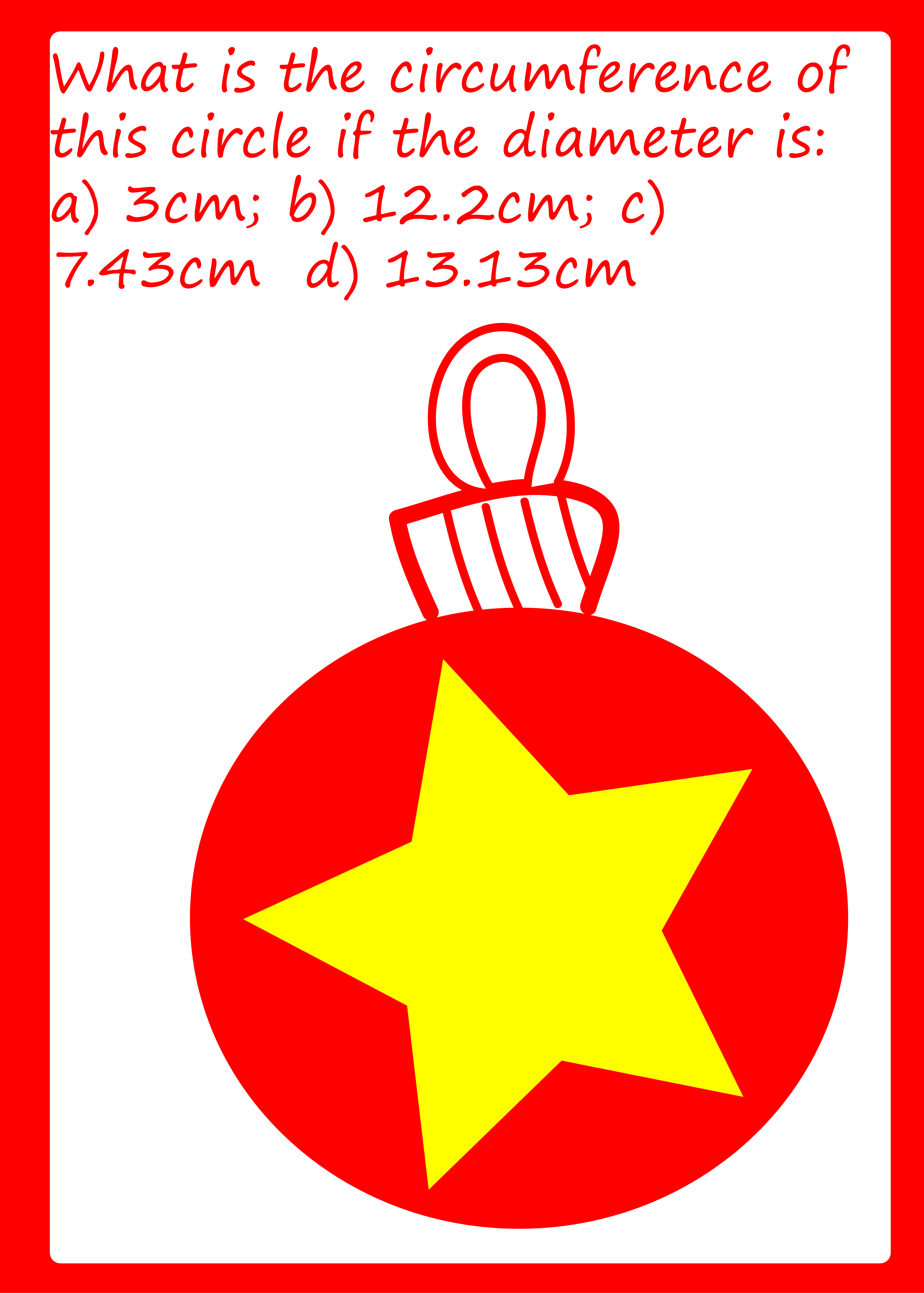
Here’s some more Better Tuition advent calendar maths. Use pi x d (pi x the diameter) to work out the answers.

If your child struggles with maths, call Better Tuition on 0161 748 3912 to book your FREE assessment.

Looking for a maths, English or science tutor in Urmston or Stretford? Contact Better Tuition today to book your FREE assessment.


Print Friendly, PDF & Email
Posted in Advent Calendar, Maths | Tagged , , | Leave a comment

Advent Calendar: December 13th – Time for Maths

Welcome to Day 13 of Better Tuition’s Winter Advent Activity Calendar.  Today we have a set of Christmas maths problems for you.

Return to our advent calendar.

Today is Friday, 13th December 2019.  The current time is 10:03.  The start of December 2019 was at 00:00 on December 1st.  Answer the following questions based on this information.

1.  How many hours and minutes have there been in December 2019 so far?

2.  How many Tuesdays have there been in December 2019 so far?

3.  How many minutes are there until Christmas Day (00:00 on December 25th)?

Scroll to the very end of the page for the answers.

Return to Better Tuition’s Advent Activity Calendar.

Does your child need help with maths?  Call Paul Syrett or Christine McLaughlin at our Urmston tuition centre  on 0161 748 3912 to book your FREE assessmentBetter Tuition is Urmston’s independent tuition centre for maths, English and entrance exam preparation.

Answers:

1.  298 hours and 10 minutes
2.  2
3.  277 hours and 57 minutes

Print Friendly, PDF & Email
Posted in Advent Calendar, English, literacy | Tagged , , | Leave a comment