Pre-School Literacy Games to Play at Home: Part Three

This is the third in our series of pre-school literacy games for you to play at home with your child.  Although these games are ideal for nursery age children, your reception age child will also enjoy them.  View Part One and Part Two.

Game Three: Bingo!

Find literacy support at www.bettertuition.co.uk

Bingo’s not just for grannies, you know!  Young children love it, and literacy and numeracy are built in naturally.  This might just be our favourite literacy game.


Objective:
to cross off six letters before the other players.

Number of players: Three, four…twenty-seven?  Lots of people can play this game.

How to play:  Each player has six letters (it’s often easier for you to write these yourself, especially if your child doesn’t know all the letters).  You could easily cut our Better Tuition Five Minute Phonics Noughts and Crosses game into groups of six letters.  One person is the caller: the caller reads letters aloud and the players cross off those in front of them.  The winner is the first person to cross off six letters and shout ‘Bingo!’

Extra help: You can also play Bingo with numbers, to help secure number recognition.

You will find some helpful advice on making sure your child is reading-ready for school here on our blog.  You should also visit our useful links page for English for some great websites to visit.

The teaching team at Better Tuition is here to help:  contact us to discuss your requirements.  We are the leading maths, English, science and entrance exam tutors in Urmston, Stretford, Flixton and Davyhulme and we offer a free, no obligation assessment.  Call us now on 0161 748 3912 and find out today why we’re better.

Print Friendly, PDF & Email
Posted in Early Years, English, FREE downloads, Key Stage 1, literacy, Pre-school, Reading, Top tips | 1 Comment

Pre-School Literacy Games to Play at Home: Part Two

This is the second in our series of pre-school literacy games for you to play at home with your child.  Although these games are ideal for nursery age children, your reception age child will also enjoy them.  View Part One and Part Three.

Game Two: Guess the Letter

This little literacy game is similar to Pictionary.  Instead of drawing pictures, players take it in turns to draw letters.  It encourages your child to practice letter formation and recognition without even noticing that they are learning!

Get literacy help at www.bettertuition.co.uk


Objective:
to guess the letters being drawn.

Number of players: two or three

How to play:  take it in turns to write single letters.  If the other player can correctly identify the letter, they gain a point.

Extra help: You can play this game with pencil or crayons and paper but you will find that an icing sugar-sprinkled surface is an irresistible canvas for even the most reluctant scribe.  It’s much easier to write with your fingers than with a pencil.

You will find some helpful advice on making sure your child is reading-ready for school here on our blog.  You should also visit our useful links page for English for some great websites to visit.

The teaching team at Better Tuition is here to help:  contact us to discuss your requirements.  We are the leading maths, English, science and entrance exam tutors in Urmston, Stretford, Flixton and Davyhulme and we offer a free, no obligation assessment.  Call us now on 0161 748 3912 and find out today why we’re better.

Print Friendly, PDF & Email
Posted in Early Years, English, Key Stage 1, literacy, Pre-school, Reading, Top tips | Tagged , , | 1 Comment

Pre-school Literacy Games to Play at Home: Part One

This is the first in our series of pre-school literacy games for you to play at home with your child.  Although these games are ideal for nursery age children, your reception age child will also enjoy them.  View Part Two and Part Three.

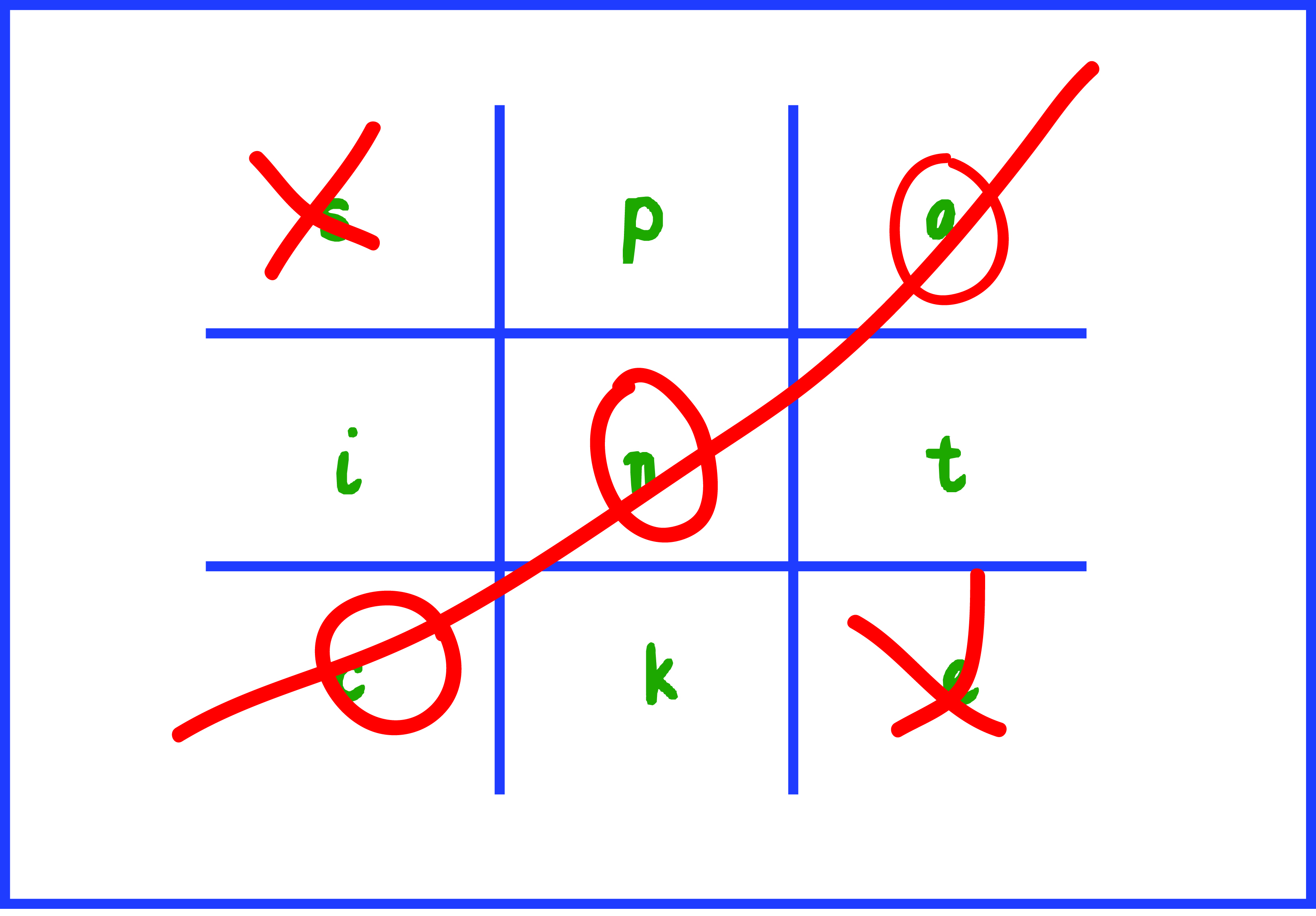
Game 1: Five Minute Phonics Noughts and Crosses

This little game has been a firm favourite with my five year old son for some time.  It helps secure recognition of letters and gives a bit of handwriting practice when drawing the ‘X’s and ‘O’s.

Find out how to boost literacy skills at www.bettertuition.co.uk


Objective:
to make a row of three noughts or crosses on the grid.
Number of players: two
How to play:  in order to place your nought or cross on the grid you must correctly name the sound made by the letter in your chosen square.
Extra help: watch this Jolly Phonics video to learn the letter sounds.
Download and print our Better Tuition Five Minute Phonics Noughts and Crosses Game.
Note: the games will print well in grayscale (and you will save printer ink while reducing your environmental footprint).

You will find some helpful advice on making sure your child is reading-ready for school here on our blog.  You should also visit our useful links page for English for some great websites to visit.

The teaching team at Better Tuition is here to help:  contact us to discuss your requirements.  We are the leading maths, English, science and entrance exam tutors in Urmston, Stretford, Flixton and Davyhulme and we offer a free, no obligation assessment.  Call us now on 0161 748 3912 and find out today why we’re better.

Print Friendly, PDF & Email
Posted in Early Years, English, FREE downloads, literacy, Pre-school, Top tips | Tagged , , , , | 2 Comments

E-Books versus ‘Real’ Books: Why Paper is Mightier than the Kindle

The E-Reader Phenomenon

“Bury me with my Kindle,” proclaimed a good friend of mine recently, somewhat alarmingly, about an object no-one had heard of a couple of years ago.

I must confess I haven’t got a Kindle and that this blog post will be determinedly biased in favour of ‘real’, paper books.  Having said that, I cannot ignore that everyone I know who has a Kindle (or other e-reader) loves it and raves about it and spends a lot of time with it – without exception.

'Real' books come in all shapes and sizes.


Paper Books are Unique

What bothers me about the Kindle is that it reduces books to just words on a screen.  It goes without saying that the most important part of any book is the words, but paper books develop their own quirks and character once they have been read twice or even 20 times.  You can’t indelibly underline your favourite phrases on a Kindle screen or turn down the page to mark your favourite chapter.

I love second hand books because they often bear the imprints of previous readers.    From a handwritten dedication in the flyleaf to a stranger’s long-forgotten shopping list, paper books offer a glimpse into their previous life that adds something extra to your reading experience.  Has a lone pressed flower ever fallen out of your Kindle unexpectedly?  Thought not.

The founders of Book Crossing understand the power of the paper book.

Book crossing: follow your books on their own unique journeys.

Described as a modern-day message in a bottle, Book Crossing members can pass books along to other readers across the world, then track them on their journey through online journals and reviews.  I imagine flocks of books, like migrating birds, shooting across the sky then scattering to new homes before it’s time to move on again.  Jean-Paul Sartre said that to read a book is to rewrite it: Book Crossing takes that philosophy to the next level, allowing us to peek at each book’s unique journey.

There’s a kind of whimsy in the Book Crossing experience that e-readers cannot replicate.

Hunting for ‘Real’ Books is an Adventure

While shopping for e-books is a solitary, almost clinical experience, the paper bookworm’s quest for literary sustenance can lead to all manner of adventures.  There are bookshops and unofficial libraries tucked away where you least expect them.

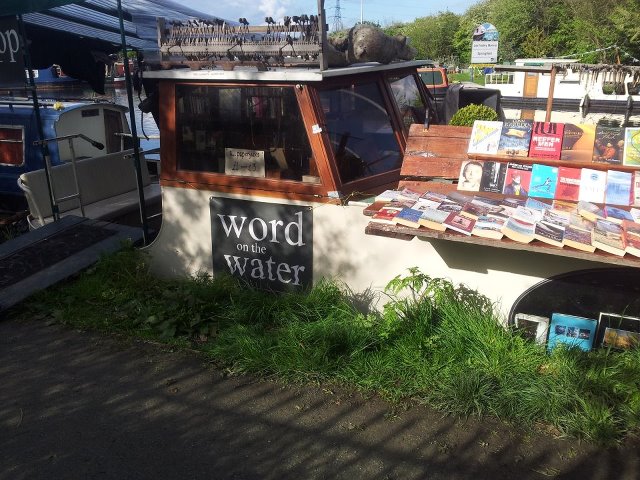
Word on the Water floating bookshop

For example, Word on the Water is a floating bookshop.  Housed in a travelling barge,  Word on the Water sells quality second hand books from cult classics to children’s books and a nice line in quirky, wouldn’t-have-thought-to-look-for books.  They also run  poetry slams, readings and live acoustic music on their roof stage.  Does your Kindle have a roof stage?  Thought not.

A book shop with no fixed location is reminiscent of the magical lands created by Enid Blyton or JK Rowling – but Muggles can check the whereabouts of Word on the Water on Twitter.

‘Real’ Books Bring People Together
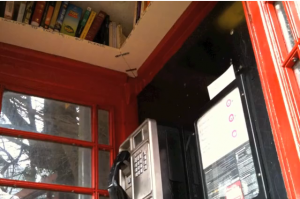
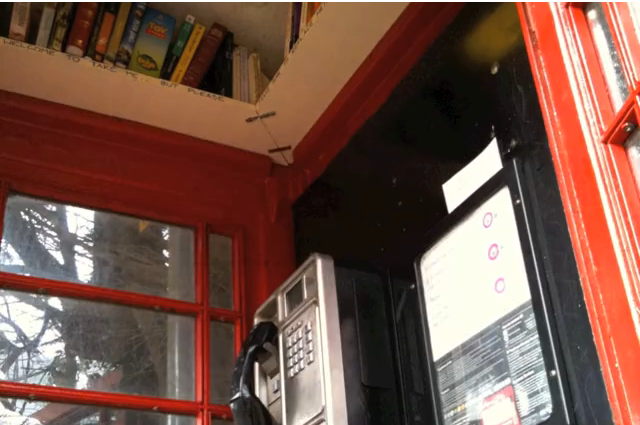
Phoneboox: a library in a disused phone box

‘Real’ books can provide a focal point for communities (hence the strength of feeling against proposed library cuts or closures) and spark social movements.  James Econs saw a disused red telephone box in Horsley, Surrey and quite spontaneously set about what he describes as Socially Beneficial Creative Vandalism and what others might more prosaically describe as Turning a Phone Box into a Library.  The Phoneboox gives you the opportunity to take a book you might never, ever have thought of reading and to pass on your own books for free.

Does your Kindle spout free books unexpectedly and spontaneously?  Thought not.

My favourite local book exchange is at the Unicorn Grocery in Chorlton, Manchester, but you can find them all over the country.

‘Real’ books can be picked up and leafed through.  An amazing piece of imagery or turn of phrase can catch your eye and ignite your interest.  They can be passed on or loaned out to friends.  They can be discovered in old phone boxes, down the backs of sofas or floating down theThames.  Although reading is a solitary activity, paper books can bring people together in a way that e-readers never will.  For this and many other reasons, I prefer ‘real’ books and I expect I always will.

Image of books: Paul / FreeDigitalPhotos.net



Print Friendly, PDF & Email
Posted in Opinion, Reading | Tagged , , | 1 Comment

How can I make sure my child is reading ready for school?

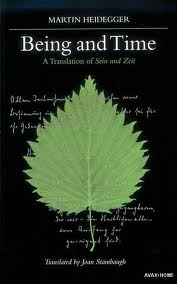
Parents often ask the team at Better Tuition how they can make sure their young child is ready for school?  The first thing to say is that not all children are ready for reading Heidegger’s Being and Time by the time they start Reception (P1 in Scotland, junior infants in Ireland)!

Heidegger...not suitable for pre-schoolers!

This is why, in many countries such as Hungary and Finland, children are not considered ready for school until they are seven – and overall academic achievement is actually higher in those countries than in ours!

However,  it is certainly true that all pre-school children can enjoy literacy-related activities that will help bring them closer to learning to read.  This will really help them get ready for school – just be careful not to push them so much that you put them off!

Get ready for school: sound it out

If your child has attended nursery since they turned three, they will probably have learned all or some letter sounds (phonics).   My little boy, who started Reception in September, hadn’t covered all the letter sounds at nursery but he enjoyed phonics so we practised at home.

Most schools introduce the letters in chunks, starting with:  s, p, a, i, n, t.  All the letter groups are listed here, with actions to help children remember the sounds.

Many parents feel a bit anxious about introducing sounds, in case they get it wrong: watch this (with or without your child!) and the catchy tunes will soon having you sounding out letters like an early years expert.  My little boy loved these songs and would dance around performing the actions and singing his heart out for anyone who wanted to watch him.

Get ready for school: gripped with enthusiasm

Writing can often be slower to come than letter recognition – pencil grip is a frequent problem with 4 year olds and older children alike.  Don’t worry if this is the case: let your child scribble and encourage him/ her to colour in.  Don’t do much letter formation if they can’t master the dynamic tripod posture.

If your child gets ’grip rage’ when attempting to write letters with a pencil, let them write their name with their fingers in sand or, if you haven’t any sand to hand (!) sprinkle a flat surface with flour and let them write letters or draw pictures with their finger:  they LOVE this, especially if the flour sprinkled surface is a precursor to home made pizza!

The next step could be to let them write their name with a wet paintbrush on the same floury surface.  After this they will have built up their confidence enough to have another try with a pencil or crayon.

Get ready for school: the next stages

You should encourage your child to identify initial sounds, such as c for cat – I Spy is ideal for this – then final sounds – such as the g in dog.   We also use the Jolly Phonics DVD, which teaches all the letters plus blends, which is the next stage.  It’s pretty dated but very thorough.

A final word of advice

Finally, let’s go back to the beginning: don’t push your pre-school child if he or she is not yet ready to learn to read or write.  This is very common and not a cause for concern.  Your child does not need to be able to read in order to be ready for school.  Keep reading to your child, take them to the library and praise them when they show an interest in books: they will love reading forever if you let them wait until they are ready.

Print Friendly, PDF & Email
Posted in Early Years, English, Key Stage 1, Top tips | Tagged , , , | 5 Comments

Five everyday ways to have fun with maths

It’s easy to find fun, everyday ways to boost your child’s maths performance because maths is such a huge part of everyday life!  Read our tips to find out how you and your child can have fun with maths.

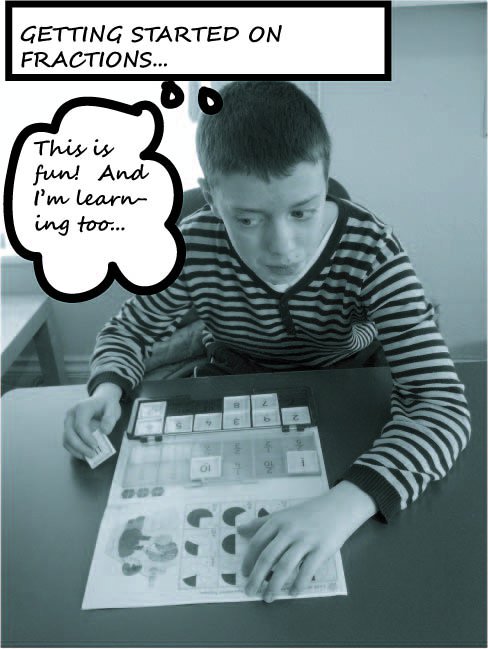
Have fun with maths at the Better Tuition Centre

1.  Baking, cooking, even making a pizza – the preparation of food raises awareness of ‘bigger or smaller’, teaches your child about measures and can be used to introduce fractions, conversions and ratio.  More on measures here.

2.  Shopping – from, “choose me five apples,” for early learners to, “find me the cheapest washing powder,” for older children, a shopping trip can provide great fun with maths.  Why not ask your child to weigh fruit and vegetables on the big scales: what child could resist?

3.  Bus or train journeys – the ability to read a bus or train timetable uses lots of maths skills.  Challenge your child to work out expected journey times.  S/he will need a good awareness of time for this.

4.  Handling data is a big part of maths.  Why not help your child to record how long the journey to school takes each day for a week.  The results could then be presented in a bar chart, line graph or even a pie chart.

5.  Finally, what could be better than maths that gets your housework done?  Take two boxes: challenge your young child to fill one with five objects smaller than a tennis ball, and the other one with five objects bigger than a tennis ball.  You can also use the ten objects to practise number bonds up to ten.

For more help with maths, please visit our useful links page,  or contact us to discuss your requirements.  We are the leading maths tutors in Urmston, Stretford, Flixton and Davyhulme and we offer a free, no obligation assessment.  Call us now on 0161 748 3912 and find out today why we’re better.

Print Friendly, PDF & Email
Posted in Maths, Top tips | Leave a comment

Trafford entrance exams: what should I be doing over Easter?

If your child is preparing for Trafford’s grammar school entrance exams, you may like to plan some activities for the two week break. 

Better Tuition can help you prepare for entrance exams.

1.  If you haven’t already familiarised yourself with the various requirements of each school, you should read our handy guide now.  Each school has slightly different exams so you do need to make sure you are aware of these.

2.  Next, make sure your child is familiar with verbal and non-verbal reasoning.  Put simply, verbal reasoning assesses your child’s ability to decode word problems whilst non-verbal reasoning is more visual.  You can read our simple guide to verbal reasoning and introduction to non-verbal reasoning.  You should also download our FREE NVR practice paper.

3.  In addition to this, your child will need to hit a pretty high standard in maths and English.  S/he may not want to spend a lot of time on ‘book work’ over the holidays, so why not have some fun with our useful links?  We have put together a collection of links which cover those tricky areas that come up time and time again, including some really fun learning games.

4.  Consider booking one of Better Tuition’s practice entrance exams.  These pinpoint your child’s weak areas as well as giving them a good idea of what to expect in the ‘real’ exams.

5.  Do you need a tutor for entrance examsBetter Tuition are the leading providers of tuition in the areas of Urmston, Stretford and the wider Manchester area.  We offer a FREE assessment, expert tuition and guidance and excellent value for money at £25 per 80 minute session (£18.75 per hour).  Call Paul Syrett or Christine McLaughlin on 0161 748 3912 to book, or call in and see us at our professionally equipped tuition centre at 1, Crofts Bank Road, Urmston, M41 0XH.

Print Friendly, PDF & Email
Posted in Uncategorized | Leave a comment

The Association of Professional Tuition Centres: delivering the gold standard in tuition

I was delighted to be asked this week, “Is Better Tuition a member of the Association of Professional Tuition Centres?”  Why?  Because it shows that the association, which we helped found last year, is fast becoming the gold standard in professional tuition.

We wanted to create a network of professional tuition centres that all reached the same high standards.

What are those standards?  Each member of the Association of Professional Tuition Centres promises the following:

– Our tuition centres are staffed and run by qualified, experienced teachers.

– We provide a pleasant, yet focused learning environment which is professionally equipped to create the optimum conditions for learning.

– Our students make rapid progress.

– Our teachers are CRB checked.

– Our resources are designed with the demands of the UK National Curriculum and GCSE/ Standard Grade syllabus in mind. 

– We offer good value for money, starting with a FREE assessment for all prospective customers.

Members of the Association of Professional Tuition Centres also work together to seek out the very best resources for our learners, sometimes collaborating or commissioning and sometimes producing them alone then sharing them.  We continually develop the resources we offer so that all members of the Association of Professional Tuition Centres can remain at the cutting edge of the UK education system.

Although the requirements of the UK education system is at the heart of our service, each member centre offers a service that takes account of local differences

For example, here in Trafford the grammar school system still exists.  Our two Trafford members, Better Tuition and Step-up Tuition, are the leading experts in entrance exam preparation in the area.  We offer focused, individual tuition to prepare Year 5 students for the exams, as well as practice entrance exams.

The Association of Professional Tuition Centres meets regularly to discuss how we can maintain and improve educational standards.  New, stringently vetted, members are joining all the time.  To find a centre near you, please visit the Association of Professional Tuition Centres’ website
To book some lessons at Better Tuition or to arrange a FREE assessment, please call Paul or Christine anytime on 0161 748 3912 or email us at bettertuition@bethere.co.uk.  You can also call in to our office at 1, Crofts Bank Road, Urmston, M41 0XH to discuss your requirements in maths, English, science or entrance exams tuition.

Print Friendly, PDF & Email
Posted in Entrance Exams, News and Updates | Tagged | 1 Comment

Demystifying maths measures: how to help your child tell a metre from a litre

Why are maths measures important?

For the teaching team at Better Tuition, maths measures are endlessly fascinating.  Did you know there is a definitive kilogram kept under lock and key in France?  Did you know a metre is actually defined as the distance light travels in a tiny fraction of a second?   Still awake?  Then read this, for interest. 

Better Tuition can help your child understand maths measures

On the other hand, if you’re not sure whether a kilogram measures weight or wine, you’d better take a trip to this page

How to help your child with maths measures

Maths measures are one of the top areas of confusion among school-age children – not difficulty, just confusion.  It’s important that parents continually reference weights and measures in everyday life, eg. ‘fetch 1 litre of milk and a kilo of sugar’ (in the supermarket).  Measuring tasks are always popular – young people love few things better than measuring a load of differently coloured liquids, lengths of string, rope, chain and ribbon,  and weighing different foods.  If you can incorporate filling in a chart such as a pictogram and/ or colouring in, it’s the closest you’ll get to Christmas this side of July! 

If you have the time, children can help with baking and cooking from a very young age , and learning with tasty side effects is always fun.  Pre-school children can count ingredients (a form of measuring), slightly older children can identify measuring implements (a jug for liquid, scales for solids) and eventually they will be able to carry out all the measuring and even work out ratios to adjust amounts. Here are some fun,computer based activities for different ages and abilities (if your child is struggling, don’t be afraid to go back to the beginning: you can’t build a house on thin air, so really make sure the foundations are firm): 

Pre-school
Key Stage 1 (Reception to Year 2)
Key Stage 2 (Years 3 to 6)  

Try to make your child aware of how maths measures can be converted – for example that 50cm is half a metre, or that there are 2000ml in two litres.

How Better Tuition can help your child understand maths measures
At the Better Tuition Centre, our team of qualified teachers has demystified maths measures for hundreds of children in Urmston, Stretford and the wider Manchester area.  If you need a brilliant tutor, call us now on 0161 748 3912 or email bettertuition@bethere.co.uk to book your FREE assessment and find out today why we’re better.


This entry was posted on 26/01/2011 at 12:09 pm and is filed under Maths, advice. You can follow any responses to this entry through the RSS 2.0 feed. You can leave a response or trackback from your own site.

Image: SundayMorning / FreeDigitalPhotos.net

Print Friendly, PDF & Email
Posted in Key Stage 1, Maths, Top tips | Leave a comment

Parents’ Evening: A Rough Guide

How to raise concerns at parents’ evening

Parents’ evenings at school are springing up like daffodils at the moment and it is super important to attend and discuss your child’s academic and social progress.  But how do you raise concerns without seeming like a pushy parent or an unreasonable ranter?

Without a doubt, we teachers are highly skilled professionals, but what we always try to remember is that whilst we are expert in education, parents and carers are more knowledgeable about their own children as individuals than we could ever hope to be, so we welcome the chance to gather more information about our students.

First of all, if you have a serious concern about your child’s well-being or academic progress, don’t wait for parents’ evening before you contact school.  It’s important to nip problems in the bud before they grow out of control.  If you wait months to bring up an important issue, you risk unbottling your emotions in anger and the danger is you won’t then be listened to.

Concern Type 1: my child is not being stretched/ my child needs more help

All children are entitled to be taught at a level appropriate to their ability and whilst most teachers are excellent at tracking pupil progress, children don’t develop at a constant rate.  In a busy classroom, it’s impossible to notice everything.  It can help to ask for specific action to be taken: a referral to the Educational Psychologist, for example or moving up to the next level of reading book.

Concern Type 2: My child’s teacher uses methods I don’t understand

This is a common concern, especially in numeracy.  Teaching methods change constantly; the Department for Education employs an army of educators whose purpose is to come up with new ways to ‘engage learners and raise pupil achievement’/ reinvent the wheel.  You might disagree with a teacher’s methods or you might not understand it.  Most teachers are pleased to explain their methods and the rationale behind them but they are unlikely to change them at your behest.  By the way it is fine to teach your child ‘your’ way of working out numeracy problems, as long as you are confident in using it and can explain it clearly.  The DfE recommends that children learn a range of strategies for approaching different calculations.  However it is essential that your child understands the methods taught in school so if both you and your child are confused, ask the teacher to explain.  Many schools will run workshops for parents, so ask about this at parents’ evening. If you struggle with maths, exercise caution when helping your child: you wouldn’t teach someone to drive if you didn’t have a driving licence, would you?

Concern Type 3: My child is being picked on or has been treated unfairly

This is a tricky one: parents worry that if they point the finger the teacher will take offence and make their child even more vulnerable.  Like most parents, most teachers have been subject to allegations of (un)favouritism, and mostly this is because of crossed wires, because children can be sensitive, or because children sometimes don’t want to own up to poor behaviour at school, so they blame the teacher.  It’s best to go into these discussions with an open mind.

None of this is to say that teachers are never in the wrong and if this is the case you have to consider how you can move forward.  If you cannot resolve the situation with the teacher you are more than entitled to speak to the Headteacher, but do be reasonable. Remember that the common aim of all teachers is to help children make the best of their education and work towards becoming valuable members of society.

Teachers are not infallible but parents can also get things wrong so stay calm and positive and work with your child’s teachers to help them get the most out of their education.

How we can help

At Better Tuition we provide feedback to parents after each and every lesson so that they know exactly what their child is achieving and which steps need to be taken next.  One parent compared it to a mini parents’ evening every week!  Parents can call Paul Syrett or Christine McLaughlin at any time on 0161 748 3912 to discuss their child’s progress and we are always happy to give advice.  Why not book your FREE Better Tuition assessment today on 0161 748 3912 or via email?


Print Friendly, PDF & Email
Posted in News and Updates, Top tips, Uncategorized | Tagged | 1 Comment