February 2020 Half Term Activities in Manchester and Beyond

February 2019 Half Term Activities in Manchester and the Surrounding Areas

The spring break has come around quickly this year but Manchester is ready for it with an abundance of half term activities, most of which are FREE! With most Trafford schools taking 7th – 17th February for half term and most Manchester schools taking the following week, half term once again spans two weeks. Don’t worry: most ‘half term’ activities run for both weeks.

Here is our brief guide to what’s on offer, with an eye on the price (most activities are free) and the dates. Do please share these half term activities on social media and please comment below if you are aware of any events you would like me to add to this post.

Trunk Tales at Urmston Library
Golden Way, Urmston, M41 0NA
FREE

Image result for trunk tales urmston library

An interactive storytelling show created to inspire children’s love of stories and enhance their knowledge of different cultures from around the world. Suitable for ages four and up. Arabic seas, epic mountains, fields of turnips and the tallest trees will emerge from the magical trunk. Children will help Abdullah buy food for his family, find a suitor for his mouse and protect the brave bull calf from a terrible fate.

This event runs from 11 am – 12 pm on Wednesday, 12th February and is FREE – book via Eventbrite. Accompanying adults do not need tickets.

Science and Industry Museum

Liverpool Road, Manchester, M3 4FP
FREE

Gray Scale Photo of Gears

There’s a transport theme at the Museum of Science and Industry this half term: These events run from 15th – 23rd February, so be sure to visit on a Saturday if your half term starts on the 10th.

Find out how three terrific teams changed the way we travel in an interactive science show, get the goods from Liverpool to Manchester with the help of some magnificent DIY machines, and make your own fantastic mode of transport to whisk you away.

Made up Machines

Time: 11.00, 11.30, 12.00 and 12.30 (book free tickets at New Warehouse Information Desk)
Age: Recommended for ages 7 and older

Ordinary objects become extraordinary machines when you use your imagination. Work with your group to create a machine that transports goods all the way from the docks of Liverpool to the Manchester markets. Will you push it, pull it, drop it or lift it?

Make it Move

Time: 14.00–16.00 daily (drop in)
Age: Recommended for ages 3 and older

Do you like to move it? Use your imagination to make something that moves. Roll our challenge cube for inspiration and test your creation in our Experiment Zone!

Science Showdown: Terrific Teams

Time: Daily shows at 12.00, 13.00, 14.00 and 15.00
Age:  Recommended for ages 5 and older

Discover the amazing stories of engineers, inventors and explorers who teamed up to revolutionise the way we move around. Through interaction and big, fun demonstrations, you’ll bring their world-changing work to life.

Older children will also enjoy the museum’s temporary exhibition: Notables: 14 Scientists who Shaped Our Lives.

Jodrell Bank Discovery Centre
Macclesfield, SK11 9DW
Admission: £8.50 for adults/ £7.50 concessions/ £6.50 for children

The Lovell Telescope in August 2018

Science Show: the Science of a World Heritage Site
Jodrell Bank became a World Heritage site in July 2019. In this show find out about some of the important moments in this site’s history which make it such an important place.

Space Crafts
Create space-themed crafts from 11 – 4pm each day.

These events run from Saturday 15th to Sunday 23rd February and are FREE with general admission.

The Little Prince at Z Arts
335 Stretford Road, Hulme, M15 5ZA
TICKETS: £6 – £8

The Little Prince at Z-arts, Manchester

Suitable for ages 5+, The Little Prince is a  magical retelling of the much loved story with puppetry, music of North African heritage and a rich Afrofuturist aesthetic. Running from 20th – 22nd February, you can find more information and book here.

Lyme Park
Open all year round.
Admission: from £4.50 for adults. Children under five go free.

Lyme Park is a glorious stately home, tucked away on the fringes of Stockport, which boasts spectacular gardens, wild moorland and a deer park. Kids can run around the play area and explore the house and gardens. More information here.

Kids Go Free at Dino Falls Adventure Golf
Old Park Lane, M17 8PG Manchester, United Kingdom
Adults: £8

Back by popular demand for 2020, the Kids Go Free before 10.30am offer returns from 17th – 28th February. Available Monday to Friday ONLY, one child goes free with each paying adult. Full T&Cs, here: www.dinofalls.co.uk/offers/2020/1/31/kids-go-free-february-half-term

Half Term Family Fun at City Airport (previously Barton Aerodrome)
Liverpool Rd, Eccles, Manchester M30 7SA
Admission is FREE – but charges apply for funfair and other activities (see below)

Join the fun at City Airport with its traditional family funfair, children’s entertainer, disco, games and prizes.

Watch aircraft land and take-off from the Control Tower First Floor Balcony. There is also a free Children’s Play Zone featuring swings, aeroplane ride-on and specially designed ‘Control Tower’ climbing frame with climbing net, fireman pole, slide and swings.

This event runs from Saturday 15th to Sunday 23rd Feb, daily from 12 pm – 5 pm. Parking is free. More information at www.visitcityairport.co.uk/fair

Dippy the Dinosaur at One Riverside, Rochdale
Number One Riverside, Smith Street, Rochdale OL16 1XU
FREE

The world famous Diplodocus dinosaur cast from the Natural History Museum is on a national tour and Dippy is currently residing in Rochdale, until June. Visitors can look forward to a unique day out, with two dinosaur experiences to enjoy.

Meet Dippy at Number One Riverside, Smith Street, Rochdale OL16 1XU. This superstar dinosaur which has been seen by millions of people in the Natural History Museum in London. You can also explore the discovery lab with hands-on exhibits, a storytelling space and a projection of a herd of diplodocus dinosaurs.

Next, you may take the short walk (0.4 miles) to the family friendly exhibition at Touchstones Rochdale. There you can learn more about the diplodocus. Explore the world of dinosaurs and see some fossilised bones, on loan from Natural History Museum and Manchester Museum.

Beyond Half Term

A break from school is a good time to take stock of your child’s progress at school. Is s/he meeting expected levels? Does s/he need to be pushed more? Are there any important tests or exams coming up during this school year (you can check this here)? Are you preparing for entrance exams in September (dates here)? You may be thinking about booking some tuition. Who better to choose than our team of qualified teachers at Better Tuition? Since April 2008 we have helped many hundreds of children achieve and succeed in school. Call Paul Syrett or Christine McLaughlin now on 0161 748 3912 to book your FREE assessment or FREE trial lesson. Try us: you will be amazed at the impact we make with just a few lessons.


Print Friendly, PDF & Email
Posted in Events and Activities, Uncategorized | Tagged , | Leave a comment

Improving Reading Comprehension: Suggestions and Guidance

What is Reading Comprehension?

reading books

Reading comprehension is crucial to exam success.


Reading comprehension is, quite simply, understanding texts. Comprehension is crucial to becoming a good reader. Teachers and parents agree that there is little point to reading without understanding!

Furthermore, reading comprehension is tested at the end of Year 2, Year 6 (SATs) and Year 11 (GCSEs). If you live in Trafford, your child may sit grammar school entrance exams, which always include a comprehension passage. Many further education colleges will only accept students with a GCSE English grade of 4 and above. Finally, reading comprehension is a skill needed for all areas of study, including maths, science and humanities.

At Better Tuition, we have helped hundreds and hundreds of young people hone and perfect their reading comprehension skills. Not surprisingly, we’re considered experts in the field.

Here are our very best suggestions for improving reading comprehension skills. Some apply to younger children and some apply to older children.

General Guidance for Good Reading Practice

  1. Join the library and visit it frequently. Enjoy choosing books with your child.

  2. Read to and with your child. Listen to your child read.

  3. Talk about what you have read. You’d be surprised how often children will listen quietly to a story, or read it aloud confidently, without thinking about it or understanding. Ask ‘Who is this story about?’ or ‘What do you think will happen next?’.

Specific Guidance for Completing Reading Comprehension Tasks

  1. Scan the questions briefly. This will give purpose to your reading.

  2. Read the passage carefully and methodically.

  3. Read the questions again, highlighting key words such as ‘Who’, ‘Why’, ‘Where’, ‘What’, ‘How’ and ‘When’. This will help you ensure you are answering the right questions!

  4. Be aware of how many marks are available for each question. This will help you to know how much you should be writing and how long to spend on each question.

  5. Use evidence from the text but don’t copy out long passages. Just use brief quotes, properly punctuated by quotation marks. If you want to use a longer quote you can shorten it like this:                                    “Witness this army … event”

              This method replaces words with an ellipsis, saving you time.

  1. Always explain the quotations you have lifted from the text. This is how you demonstrate understanding of what you have read.

  2. Don’t forget to reread the question after you have written your answer: make sure you have not misinterpreted the question!

Does your child need an extra boost in reading comprehension? Please give Paul Syrett or Christine McLaughlin a call on 0161 748 3912. We’ll organise a free assessment or free trial lesson for you at our Urmston tuition centre and you can be assured that our qualified teachers will give your child the best possible chance of exam success.

Print Friendly, PDF & Email
Posted in Comprehension, English | Tagged | Leave a comment

How poetry can unlock your child’s creative writing genius

Creative writing can be a problem for many children. Some find it hard to set their ideas down on paper. Some lack the confidence to display their inner thoughts on paper. Some just cannot come up with the ideas in the first place. If your child has difficulty with creative writing, Better Tuition can help. One way we unlock creativity is through the medium of poetry.

You may find this approach surprising; after all, students are not required to write poetry at GCSE level, nor does it feature in SATs. Let me assure you, this approach works: poetry acts like a conduit to prose. Of all forms of creative writing, poetry is the most powerful. It teaches us that writing isn’t about volume; it’s about imagery and sound, rhythm and cadence. Poetry makes words dance on the page.

Once you have learned to write poems with confidence, prose is a piece of cake.

Let’s take Student A as an example. Like many others, the student lacked confidence in creative writing. She simply hated to write because, I suspect, she feared criticism. We began by working on haikus and tankas.

Haikus and Tankas are Japanese in origin. A haiku is a three-line poem consisting of:

Five syllable line
Then seven syllable line
Five syllable line

Most haikus are about nature. We read some examples of haikus, then my student wrote her own. She could see it was not too difficult because it’s very short and the only rule is that you must stick to three lines and the 5-7-5 syllable rule.

Next, we moved on to tankas.  A tanka is very similar too, but slightly longer than, a haiku. It follows the pattern:

Five syllable line
Then seven syllable line
Five syllable line
Then seven syllable line
And seven syllable line

Like haikus, tankas are often about nature and in addition to this they often express emotion. They are a nice, not-too-demanding step up from haikus. You could also, at this stage, consider including simile, metaphor and other literary devices. Student A enjoyed writing haikus and tankas because she could express herself and describe the loveliness of nature without needing to ‘fill a page’. What’s more, haikus and tankas do not need punctuation so Student A could focus on using her imagination.

Then we moved on to found poetry. Found poems are made by taking words, phrases, and sometimes whole passages from a page in a book, a newspaper or even the back of a cereal packet. Student A felt really empowered because she was freed from the need to come up with all the words herself.

After this, we moved on to acrostics. An acrostic poem offers a really clear structure and it doesn’t have to rhyme. Students feel free to experiment with language because they know that the only rule is that the first letter of each line must spell out a given word. As long as they do that, they’ve got it right.

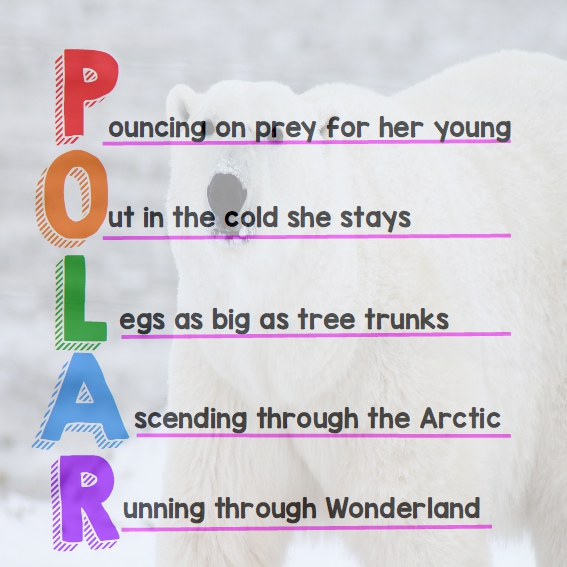
This is Student A’s acrostic poem.

an acrostic poem about a polar bear
I love this poem because it really captures, in just a few lines, the life of a mother polar bear. You feel like you’ve observed her at close range.

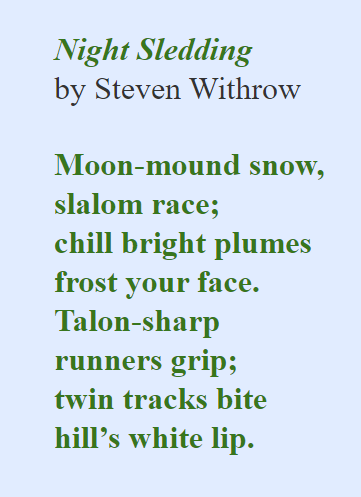
I’m planning to move on to a cethramtu rannaigechta moire poem with Student A. Here is an example of a cethramtu rannaigechta moire poem by Steven Withrow.

Luckily this Irish poetic form is easier to execute than it is to pronounce. This poetic form is satisfying because it is so simple. It is made up of four-line stanzas (we call these quatrains) and lines two and four rhyme. Each line has three syllables.

There’s nothing like a poem to soothe the soul, uplift the spirits and heal the metaphorical cuts and bruises we all pick up on life’s journey. A good poem is a hug, a cup of tea and a long bath all in one. Poetry reassures us we are not alone. It celebrates the majesty of everyday life and the wider world. So my final piece of advice is to read poetry with your child. Carol Ann Duffy, Allan Ahlberg or Roald Dahl are three of my favourite children’s poets, but there are many more.

If your child needs some help with creative writing, contact us today to book your FREE assessment or FREE trial lesson. You may also like to download our FREE creative writing workbook.

Book a FREE assessment


Print Friendly, PDF & Email
Posted in English, Poetry corner, Uncategorized | Tagged , , , , , | Leave a comment

Ofsted Inspections: what are they and how will they affect your child?

Ofsted inspections are a really important part of your child’s education. At some point during your child’s education, the Office for Standards in Education (Ofsted) will pay a visit. After this, your child’s school will be rated and a report will be made publicly available.

School staff will be interviewed by the inspectors.

School data is scrutinised and verified.


What is Ofsted?

Ofsted is an independent regulatory body, reporting directly to the British government. Ofsted inspections are carried out by a team of inspectors, who will measure the effectiveness of your child’s school. Schools are given one of four ratings:

  • Outstanding

  • Good

  • Requires improvement

  • Inadequate

The ‘outstanding’ rating is given to only around 3% of schools.

What happens when Ofsted carry out an inspection? 

Your child’s headteacher will be informed by telephone the afternoon before the inspection begins. The lead inspector will speak to the headteacher to gauge some initial details about the school.

Inspections normally last two days. The team of inspectors will interview the school management team and teachers. They will also speak to students and staff. Crucially, they will observe lessons.

Pile of Folders

School data will be scrutinised and verified.

Inspectors sometimes ask to speak to parents. More usually, parent views are gleaned from Parent View.

Parent View allows you to let Ofsted know more about your experience with your child’s school. You will be able to complete an online survey which asks questions about behaviour, SEND, communication and more. Parents read statements such as ‘My child feels safe at this school’ and choose an answer from ‘strongly agree’, ‘agree’, ‘disagree’, ‘strongly disagree’ or ‘don’t know’. People as a rule are more likely to give feedback if they have had a negative experience (just look at Trip Advisor), so don’t neglect to fill in the survey if you are happy with your child’s school as too many negative comments will skew the inspection findings. Read more about Parent View here.

How will an Ofsted inspection affect my child?

It’s important to remember that Ofsted are not there to inspect your child or to assess his/ her performance in school. The inspectors are there to check the school’s ability to provide appropriate support and learning. Inspectors may observe lessons and they may approach your child to ask a couple of questions about their experience in school. They may also ask to see your child’s work.

After the Inspection

Ofsted’s inspectors will  give feedback to teachers, staff and SLT feedback before making their final judgement. It normally takes a few weeks to publish the formal report.

What happens if my child’s school is rated inadequate?

If this happens, your child’s school will fall into one of two categories.

  • Special Measures
     This means that the school is rated inadequate and is 1. failing to provide adequate education for its students whilst 2. showing grounds for improvement.

  • Serious Weakness
    The school is rated inadequate but only fails on one of the above judgements that would make it eligible for Special Measures.

In each of the above cases, the school will be subjected to greater scrutiny and more frequent visits by Ofsted until standards are raised to an acceptable level.

The Final Report

Schools must inform parents about Ofsted’s rating and the final inspection report will be made available to you. If you have any concerns about Ofsted’s inspection, raise them first with your child’s headteacher and then with Ofsted.

Print Friendly, PDF & Email
Posted in Uncategorized | Tagged | Leave a comment

Handwriting: what you need to know and how to help

Are you concerned about your child’s handwriting? If so, you are not alone. Many parents bring their child to Better Tuition because they are concerned about this essential skill.

Woman in White Long Sleeved Shirt Holding a Pen Writing on a Paper

Our children see us use it less and less, but don’t be swayed by this lack of prevalence. Handwriting is every bit as important as it ever was. School exams demand handwriting that is neat, legible and reasonably speedy. Furthermore, two major studies have concluded that handwriting imprints words on our memory far more effectively than typing. So if you want to remember what you’ve written, do it by hand and not on a laptop or tablet. You can read these studies here and here.

Believe it or not, your toddler’s scribbles are their first steps towards developing handwriting. By the time they finish Reception (age 4-5), children should* be able to write lower case letters, though these will be large and probably quite messy. Handwriting should develop throughout primary school and, by the end of Year 6, your child’s writing should* be joined, fluent and legible.

Are you sitting comfortably?

Girl Writing on Paper

A proper sitting position will really help your child to produce their best handwriting. Ensure their feet are resting firmly on the floor.  Next, check that they are squarely facing the table. They should be sitting with their forearms resting on the table and sitting right back on the chair so that their hips touch the back of the chair. The chair should be pulled in closely to the table.

A Gripping Tale

Image result for dynamic tripod grip

Most children will perfect their pencil grip by Year 1 or 2. Most of us use the ‘dynamic tripod grip’ (see above). The correct pencil grip will help your child form neat letters and write at speed. You can encourage a good pencil grip by having your child rip and scrunch tissue paper; create with play dough; help hanging out the washing (pinching clothes pegs develops the pincer grip); do colouring-in and dot-to-dot puzzles.

Left-Handed Handwriting

Left-handed writing is often rather messy. This is unsurprising, since lefties have to push the pen across the page, rather than pulling it, as right-handed writers do. Left-handed writers should get into the habit of tilting the paper to the right (at about a 45 degree angle) and pulling their elbow in towards their waist. You can read more about left-handedness here on our blog.

Does Your Child Have a Developmental Disorder?

Early handwriting is usually large and quite messy – after all, your child is only just beginning to learn how about pencil control. If handwriting is still very large by the end of Year 2, however, this may indicate a lack of motor control.

Visual-perceptual problems are common in handwriting. This may include confusing letters (e.g. mixing up ‘g’ and ‘y’) or reversing them (‘b’ and ‘d’ are the most commonly-confused pair).

Some children may write so fast they misspell or miss out words.

Any of the above problems may be associated with developmental disorders such as dyslexia, dyspraxia, Autistic Spectrum Disorder or Attention Deficit/ Hyperactivity Disorder. That doesn’t mean that your child has a developmental disorder – just that it may be worth investigation. Speak to your child’s teacher first of all as s/he knows them best. You may also wish to contact the National Handwriting Association.

If you have concerns about your child’s handwriting, why not get in touch with Better Tuition? Call Paul Syrett or Christine McLaughlin on 0161 748 3912 and find out how we can help. You can book a FREE assessment and we can advise you on your next steps.


*DISCLAIMER: children develop at different rates. There is no need to worry if your child doesn’t meet government guidelines bang on schedule.

Print Friendly, PDF & Email
Posted in Uncategorized | Leave a comment

Practice Entrance Exams, Masterclasses and Summer School 2020

the perfect learning environment at better tuition

Better Tuition is offering more entrance exam services than ever before in 2020. Our services are open to everyone: you may choose to attend one practice entrance exam, for example, or one masterclass, or to attend summer school lessons over the long school break. You may like to download and print our entrance exam services schedule 2020.

Practice Entrance Exams

Our introductory entrance exam takes place on 1st March. This exam is suitable for Year 5 children studying for any Trafford entrance exam. Book our introductory entrance exam now:</h3>

Our further practice exam dates are as follows:

CEM-style (Urmston, Stretford, Sale Grammar and Altrincham Grammar School for Girls):


These exams will take place from 9.30 – 11.30 am on the following dates:

5th April
10th May
14th June
12th July
16th August

There will be two further dates, one around one week before the official examination and one during the summer holidays. Book your CEM-style examination here:</h3>

GL-style (Altrincham Grammar School for Boys, Loreto and St Ambrose):

These exams will take place from 9.00 – 11.45 am on the following dates:

17th May
5th July
9th August

There will be one further examination which will take place on a Sunday at the beginning of September, date TBA. Book your GL-style examination here:</h3>
All practice exams cost £45, with a £5 discount for current customers. You can read more about our practice exams here.

Masterclasses

These cost £55 and will run on several dates during the Easter holidays and the long summer break on the following dates:

Masterclass

Focus

Date

SUITABLE FOR

EXAM TECHNIQUE MASTERY Timings, techniques and dealing with nerves Thursday, 23rd July (am)
& Thursday, 20th August (pm)
CEM & GL
MATHS A Core Skills – Add, Subtract, Divide and Multiply Tuesday, 31st March (am) CEM & GL
MATHS B Number Thursday, 23rd July (pm) CEM & GL
MATHS C Handling Data Thursday, 6th August (am) CEM & GL
MATHS D Geometry Thursday, 13th August (am) CEM & GL
MATHS E Algebra Thursday, 20th August (am) CEM & GL
NVR A Core Skills – The Eight NVR Question Types Monday, 30th March  (am)
NVR B Reflection and Rotation Thursday, 30th July (am) CEM & GL
NVR C Codes and Analogies Thursday, 6th August (pm) CEM & GL
VR A Core Skills – Vocabulary and Comprehension, familiarisation with different question types.  

Monday, 30th March  (pm)

VR B Comprehension and Cloze Thursday, 30th July (pm) CEM, Loreto & Ambrose
VR C Vocabulary Thursday, 13th August (pm) CEM ONLY

You can read more about our masterclasses here. Book your masterclass now:

Summer School 2020

Summer School will run on the following dates and times from Tuesday, 21st July until Tuesday, 1st September (inc):

Tuesdays, from 21st July                     Wednesdays, from 22nd July

Session 1: 10:00am – 11:15am               Session 1: 10:00am – 11:15am                                                                                                         Session 2: 11:30am – 12:45pm
Session 2: 4:00pm – 5:15pm                   Session 3: 4:00pm – 5:15pm
Session 3: 5:30pm – 6:45pm                   Session 4: 5:30pm – 6:45pm

We do not accept bookings for summer school before June. This ensures that those parents who work irregular hours are not disadvantaged.

Summer School lessons cost the usual £28.

Print Friendly, PDF & Email
Posted in Entrance Exams, Uncategorized | Tagged , , | Leave a comment

100 Winter Maths Problems – FREE Download

Download 100 Winter Maths Problems FREE!

Download 100 Winter Maths Problems FREE!

Our 100 Winter Maths Problems is FREE to download. Ideal for Years 4, 5 and 6, it’s the perfect way to keep your child focused on learning whilst still enjoying all the fun of the festive season.

Number, measures, shape and handling data are all covered over 29 pages. You can print it out (we recommend grayscale for environmental reasons), or simply work from the computer screen. Some teachers put a page a day on their interactive whiteboard as a starter activity. Others divide the class into groups and give a different page or two to each group.  The groups can work together to come up with solutions, then explain their calculations to the rest of the class. This workbook is perfect for home use too: try to build it into your festive routine and do a few problems each day.

Here are some examples of the type of maths problems included:

How many hours are in Christmas Eve, Christmas Day and Boxing Day?

If reindeer can run at 52 km per hour, how many km can they run in 15 minutes?

Allie builds three snowpeople. The snowman is 120 cm tall; the snowwoman is 10 cm
smaller. The snowbaby is half the height of the snowwoman. How tall is the snowbaby?

What we love about this resource is that children feel like it’s a treat because there is mention of tinsel, snow, mince pies and so on. It goes without saying that full answers are included.

Click to download 100 Winter Word Problems (Maths).

We have also created Words About Winter – a fantastic creative writing resource for all ages These resources are both FREE. If you like them, you could review them on Facebook or on Google. Teachers should feel free to photocopy and use with their classes. We hope you enjoy using our resources and that you will visit our page again.

If you need tuition in maths, English or entrance exam preparation, please read more about our service , find out about our lesson format and get in touch to book your FREE assessment.

Print Friendly, PDF & Email
Posted in Key Stage 2, Maths | Tagged , , | Leave a comment

Five of the Best Educational Online Advent Calendars

Online Advent Calendars

It’s December: soon the streets will be clad in snow and filled with the sound of carol singers and jingling bells. With three weeks until the end of term, many parents are asking: how can I keep my child focused on studying without spoiling the fun of the festive season?

1. Better Tuition’s Advent Activity Calendar

This need to remain focused was the inspiration behind Better Tuition’s Advent Activity Calendar. We have created 24 days of winter-themed activities covering maths, English, verbal and non-verbal reasoning. It’s suitable for students in Years 4, 5 and 6 and it’s completely free.

We have also created Words About Winter – a fantastic creative writing resource for all ages and abilities and 100 Winter Word Problems (Maths). These resources are both FREE. If you like them, you could review them on Facebook or on Google.

2. Science Sparks

Science Sparks Advent Calendar

Science Sparks offers a free online calendar with activities themed around science. From making peppermint creams to designing a snowperson catapult, this calendar is full of fun and really does develop your child’s understanding of science in an engaging way.


Click to visit the Science Sparks Advent Calendar.


3. Woodlands Junior School

Woodlands Junior School has come up with an online advent calendar which combines geography, history and religious studies. Take a tour around the world and find out how Christmas is celebrated in other countries.

Click to visit Woodlands Junior School’s online advent calendar.

4. Ashmolean Museum of Art and Archaeology


Benten Shrine by Kuniyoshi

View of snow on Benten Hill at Kinry?zan Temple in Asakusa by Utagawa Kuniyoshi from the Ashmolean in Oxford.

The Ashmolean is celebrating winter-themed art with its online advent calendar. Each day, a beautiful painting from the museum’s collection, such as View of snow on Benten Hill at Kinry?zan Temple in Asakusa by Utagawa Kuniyoshi, will be explored.

Use this to stimulate ideas for artwork or creative writing, or simply enjoy learning more about art.

Click to visit the Ashmolean’s advent calendar.


5. Nrich Maths

Nrich Maths offers a host of interactive maths activities for ages 5 – 11. It’s fun to join in and do this alongside your child.


Activities include a times table jigsaw, a co-ordinates themed treasure hunt and numerous puzzles. This advent calendar is excellent for developing skills in mathematical reasoning. I should mention, however, that there is not much of a Christmassy theme – which many of you may prefer.

Click to visit the Nrich Maths Advent Calendar.

Print Friendly, PDF & Email
Posted in Advent Calendar | Tagged , , , | Leave a comment

FREE 2020 Entrance Exam Seminar and Assessment at Better Tuition

Is your child currently in Year 5? Are you considering grammar school entrance exams in 2020? If so, our FREE Entrance Exams seminar is for you.

Come along to Better Tuition at 1pm on Saturday, 18th January to find out how the exams are structured and organised, how you can support your child in his/ her preparation, and what you need to do in order to fulfill Trafford’s grammar school entry criteria.

The seminar will be conducted by our Co-Director, Christine McLaughlin. Christine is a qualified teacher and a graduate of an elite, Russell Group university. Over the past 11 years, she has helped many children prepare for grammar school entrance exams.

What’s more, you can bring your Year 5 child along for a FREE grammar school assessment with our Co-Director Paul Syrett. Like Christine, Paul is a qualified teacher and a graduate of an elite, Russell Group University. Since setting up Better Tuition with Christine, Paul has developed true expertise in entrance exam preparation.

Booking is essential for this FREE event and we expect places to fill up quickly, so please do not delay in emailing us at info@bettertuition.co.uk. Please let us know your name, mobile number and the name and age of your child, if you are bringing them.

Can’t wait till January? No problem! Call Paul or Christine now on 0161 748 3912 to book your FREE assessment at Better Tuition. Find out today why we’re better!

Print Friendly, PDF & Email
Posted in Uncategorized | 2 Comments

Family Friendly Half Term Activities in Manchester and Beyond

Half term October 2019 is here – for some of us. For others, it begins next week. In any case you can take your pick of ways to entertain, educate and amuse your family in Manchester and the surrounding areas. Here is our pick of the best ones.

Dashehra and Diwal Celebrations

Image result for diwali celebrations

The Hindu festival of  Diwali brings much-needed light and movement into the still, dark and chilly evenings of autumn. Manchester Museum is hosting a major, family-friendly celebration. Dance, drama and music will be accompanied by music and craft activities.

This event is FREE and runs from 15.00 – 20.30 on Saturday, 2nd November.

Manchester Science Festival at the Museum of Science and Industry.

Museum of Science and Industry

From finding out about atoms through the medium of juggling to building your own light-up circuit, there’s a lot to do and discover at the Museum of Science and Industry. Our pick is the People-Powered Party, billed as a “pedal-powered disco” which will help you “find out how the food you eat gives you the power you need to dance all night (or day).”

This event is FREE and runs from 23rd – 30th October.

Become a Factory Inspector at Quarry Bank Mill

Quarry Bank Mill invites you to join Inspector Augustus Snout on an inspection of the mill. You can have a go at different jobs as you go round. Quarry Bank Mill’s website says you can ‘experience the dangers of working in a cotton mill’ but we assume they mean you can ‘find out about the dangers’ rather than actually experiencing as that would be, well, dangerous, wouldn’t it?

The mill trail was created by children’s author Philip Ardagh and costs 50p. Entry to the mill is free. This activity is running until the new year.

Hallowe’en Festival, Southport

Prepare to be spooked if you are visiting Southport between 26th and 29th October. The white picket fences and pumpkin lawns of a hyper-real American street have taken up residence in Town Hall Gardens. Creepy characters peek out of the windows: but will you be bold enough to find out which are waiting with treats – and which have only tricks?

This and many more Halloween-themed events take place in Southport throughout half term (and beyond, up until Hallowe’en on 31st October) and are mostly FREE. Visit the website to see the full schedule.

Monster Hallowe’en Ball, Liverpool

Image result for monster halloween ball liverpool

Billed as spooktacular party with a film showing each afternoon from the 27th-30th October, you should arrive early to be in time for dancing, games and creepy crafts with a prize each night for the best fancy dress costume. Refreshments available. Visit the website to book. Tickets cost £14.30 for adults and £11 for children.

Hallowe’en CBBC and CBeebies Spooky Screenings in Exchange Square

Image result for exchange square manchester

Get into the Halloween spirit with screenings from CBeebies and CBBC plus a host of family friendly fun inside a spooky tent. This free event is open to all ages and will feature episodes from family favourites such as Hey Duggee, Peter Rabbit, The Worst Witch, and Dennis and Gnasher Unleashed.

This event is FREE and will run on 26th and 27th October.

Anderton Firework Spectacular

Image result for anderton boat lift

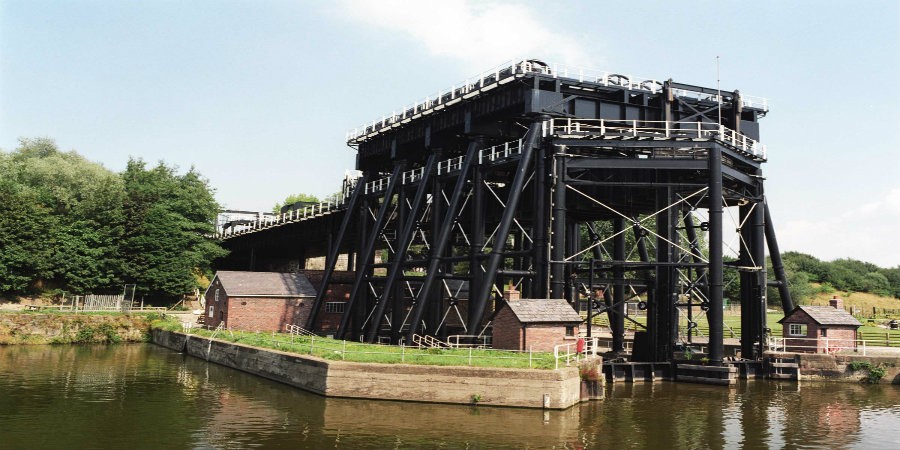
Stand on the lawned terraces of the majestic Victorian Anderton boat lift and watch as the night sky is lit up by dramatic explosions of colour over the River Weaver. Food, music, a ghost train and children’s adventure playground promise to make this a memorable evening. This event takes place from 6.30 – 11.30 pm on 26th October. Family tickets start at £20.

 Lightpool Festival, Blackpool

Image result for lightpool festival blackpool 2018

From 11th – 26th October, Blackpool’s night sky will come alive with a carnival of light. Visit the website for more details.

Better Tuition will be closed for half term until Monday, 28th October. When we reopen, why not give us a call on 0161 748 3912 to find out how we can help your child achieve and succeed in school? Find out today why we’re better!


Print Friendly, PDF & Email
Posted in Events and Activities, News and Updates | Tagged , | Leave a comment